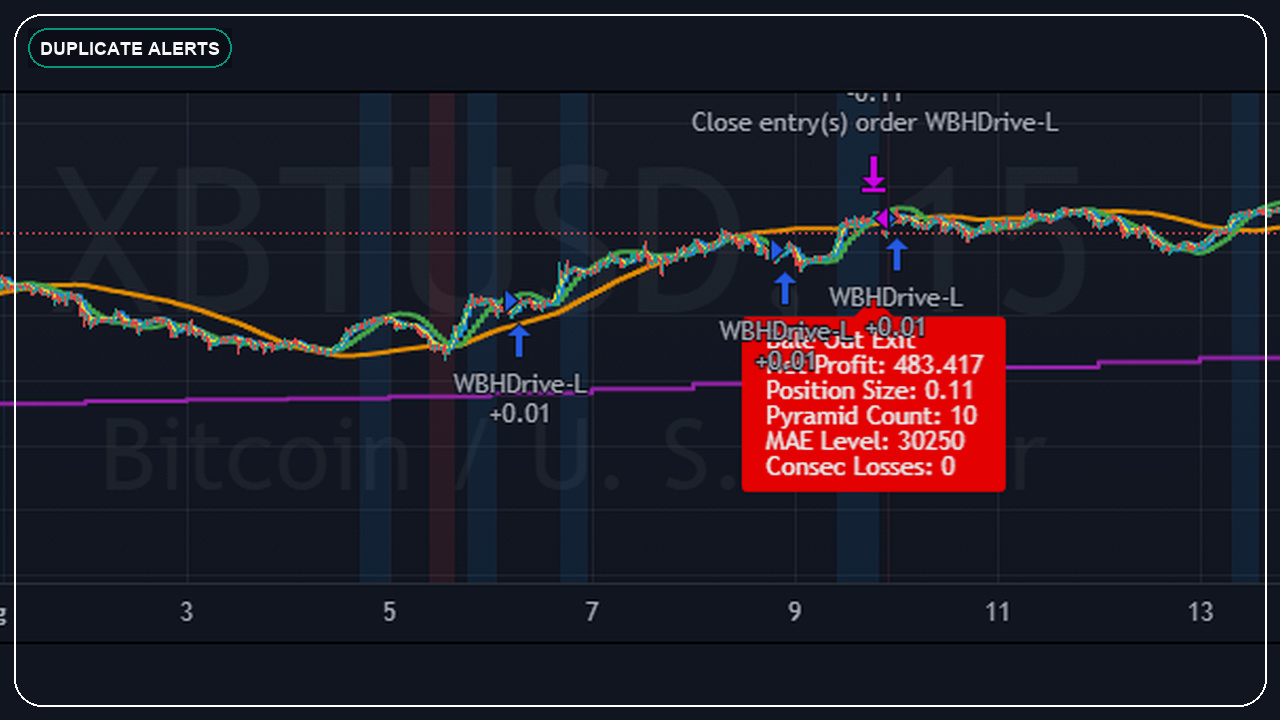
What duplicate TradingView alert orders actually does
Duplicate TradingView alert orders happen when one logical trade idea turns into two or more alert events that the execution layer interprets as separate orders.
This is one of the fastest ways to damage a live system because the script may still look visually reasonable while the execution side becomes chaotic. The trader sees one setup, but the broker sees repeated instructions.
The reason this topic matters so much is that Pine Script usually feels simple until realtime behavior, confirmation, and live alerts expose the assumptions hidden inside the code. That is where a small parameter or declaration choice can completely change the outcome.
- Duplicate orders are often a system-design problem, not a single-code bug.
- A clean event key is more valuable than vague human-readable alert text.
- Alert frequency and state gating matter before the webhook even sees the event.
- The bridge should still defend against duplicates even when the script is clean.
Where duplicate TradingView alert orders usually goes wrong
The main trap is blaming only the webhook layer or only the Pine Script. In reality, duplicate orders usually come from both sides together: a condition that can repeat and a bridge that does not know how to ignore repeats safely.
In practice, most problems here are not syntax problems. They are expectation problems. The code technically runs, but the trader expected one runtime behavior and the script delivered another. That is why this topic deserves design-time attention instead of being treated like a small implementation detail.
- Sending alerts with no event ID, version, or unique context.
- Allowing the same condition to emit several times in one lifecycle.
- Assuming the first webhook success means the event will never repeat.
- Failing to keep logs that show why the bridge accepted or rejected an event.
How to use duplicate TradingView alert orders safely in live scripts
The safe pattern is to design idempotency from the start. That means the Pine side should emit clearly defined events and the bridge should reject repeats using event keys, state checks, and logs.
The practical goal is not to make the chart look clever. The practical goal is to make the script behave the same way in live conditions as the trader expects from the finished code. That usually means explicit settings, conservative alerts, and enough instrumentation to debug what actually happened on the bar.
- Generate one well-defined alert for one meaningful event.
- Include a strategy name, side, symbol, timeframe, and event key in the payload.
- Have the bridge reject repeated keys or already-open intent cleanly.
- Review alert logs and broker logs together when duplicates appear.
I scope duplicate-order problems at the signal, payload, and broker-routing layers together because fixing only one layer usually leaves the real problem alive.
WhatsApp for a 3-minute quoteWhat to check before you trust the result
Before going live, prove that the same trading event cannot place two orders even if the alert repeats, reconnects, or gets retried.
The strongest Pine Script work feels a little boring when it is correct. The alerts line up, the visuals tell the truth, and the backtest or runtime assumptions are explicit enough that you can explain them later. That boring clarity is what you want.
- Test duplicate webhooks deliberately before any serious live rollout.
- Check whether the strategy can re-trigger during the same open position state.
- Verify the bridge stores and checks event keys properly.
- Keep alert frequency conservative until the full chain is proven stable.
Send the chart idea, broker, market, and goal on WhatsApp. I can usually tell you quickly whether it needs a custom indicator, a strategy audit, an alert fix, or a broker-ready automation layer.
Related services
Frequently asked questions
Can TradingView send the same alert more than once?
Yes. Repeats can happen through logic design, reconnect behaviour, or other workflow conditions, which is why idempotency matters.
Is an event ID enough to stop duplicate orders?
It is a major part of the fix, but the Pine logic and bridge state checks still need to agree on when the event is valid.
Should I handle duplicates in Pine Script or in the bridge?
Both. Pine should emit cleaner events, and the bridge should still reject duplicate order intent safely.
Why do duplicate orders happen more often in fast markets?
Because weak state handling and permissive alert timing are exposed more quickly when conditions remain close to the trigger zone.
Primary sources and references
I take on Pine Script indicators, TradingView automation layers, strategy audits, and broker-aware execution workflows when the goal is clear and the live behavior actually matters.