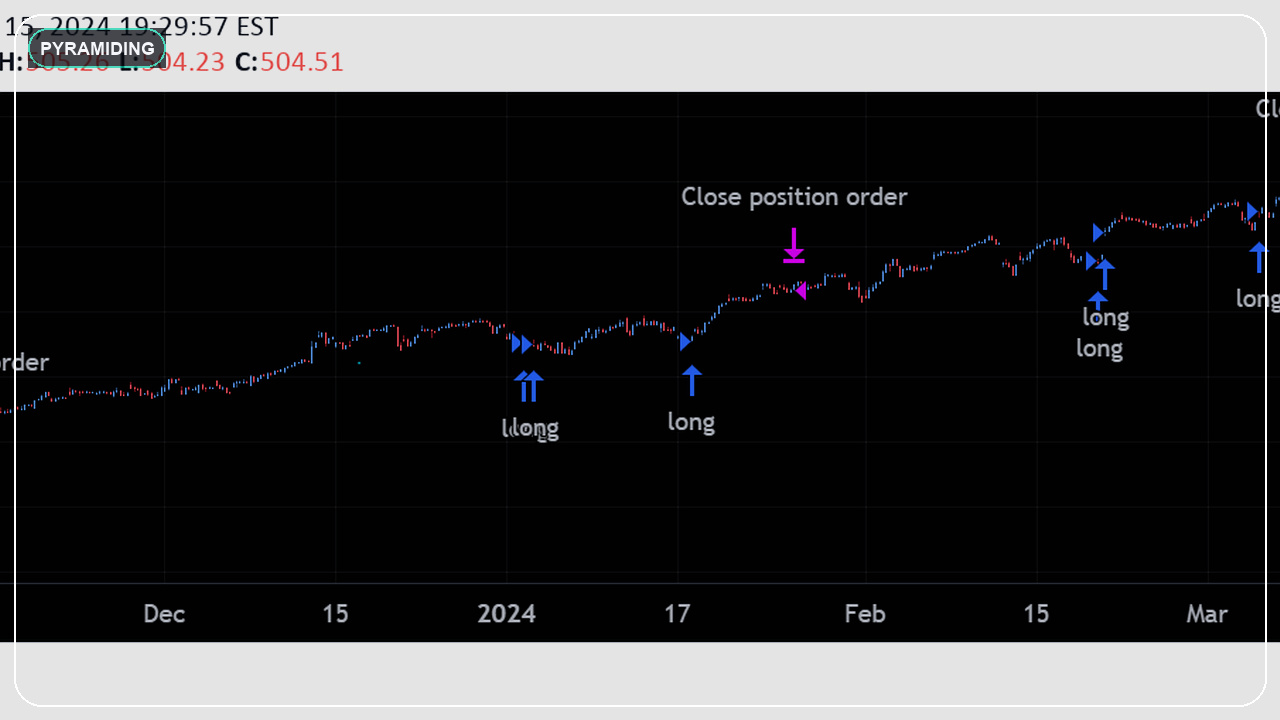
What pyramiding in Pine Script actually does
Pyramiding allows a strategy to add more entries in the same direction instead of stopping after the first one. That can be useful for scale-in designs, but it changes the risk and state model immediately.
This matters because many traders think pyramiding simply means more profit in trends. In reality, it means more complexity in exposure, average price, exit management, and signal gating.
The reason this topic matters so much is that Pine Script usually feels simple until realtime behavior, confirmation, and live alerts expose the assumptions hidden inside the code. That is where a small parameter or declaration choice can completely change the outcome.
- Pyramiding changes exposure management, not just entry count.
- Scale-ins need clear logic for sizing and average-price consequences.
- Exit rules become more important, not less, once multiple entries exist.
- Weak entry logic gets amplified by pyramiding very quickly.
Where pyramiding in Pine Script usually goes wrong
The trap is enabling pyramiding before the single-entry version of the strategy is already clean. If one entry is not reliable, several entries usually magnify the weakness instead of solving it.
In practice, most problems here are not syntax problems. They are expectation problems. The code technically runs, but the trader expected one runtime behavior and the script delivered another. That is why this topic deserves design-time attention instead of being treated like a small implementation detail.
- Turning on pyramiding before the single-entry model is proven.
- Adding entries with no separate logic for scale-in quality.
- Ignoring how stops or targets behave across the combined position.
- Using pyramiding as a way to hide weak timing.
How to use pyramiding in Pine Script safely in live scripts
The safe pattern is to treat pyramiding as a separate strategy design layer. First prove the base entry. Then define how additional entries are justified, sized, and exited.
The practical goal is not to make the chart look clever. The practical goal is to make the script behave the same way in live conditions as the trader expects from the finished code. That usually means explicit settings, conservative alerts, and enough instrumentation to debug what actually happened on the bar.
- Validate the base strategy before allowing additional entries.
- Define a specific reason for each extra scale-in opportunity.
- Keep combined-position risk and exits explicit.
- Check that alerts and broker logic understand the multi-entry state.
What to check before you trust the result
Before trusting pyramiding, check whether the strategy can explain why each added entry exists and how the total position should be controlled afterward.
The strongest Pine Script work feels a little boring when it is correct. The alerts line up, the visuals tell the truth, and the backtest or runtime assumptions are explicit enough that you can explain them later. That boring clarity is what you want.
- Compare single-entry and pyramiding results honestly.
- Inspect average price, drawdown, and exit behaviour trade by trade.
- Verify additional entries are not just duplicate signals in disguise.
- Make sure webhook routing handles adds versus fresh positions clearly.
Send the chart idea, broker, market, and goal on WhatsApp. I can usually tell you quickly whether it needs a custom indicator, a strategy audit, an alert fix, or a broker-ready automation layer.
Related services
Frequently asked questions
Is pyramiding always better in Pine Script?
No. It helps only when the strategy genuinely benefits from staged entries and the risk model remains clean.
Why does pyramiding make my alerts messy?
Because the script now has to distinguish between a first entry, an add, and a full reset state. Without that, signals become ambiguous quickly.
Should I pyramid into losing trades?
That is a separate and much riskier design choice. In most cases, pyramiding should be justified by a strong strategy structure, not by emotional averaging.
Can pyramiding work with webhook automation?
Yes, but the event payload should identify whether the order is an add, a reduce, or a fresh entry so the execution layer stays deterministic.
Primary sources and references
I take on Pine Script indicators, TradingView automation layers, strategy audits, and broker-aware execution workflows when the goal is clear and the live behavior actually matters.