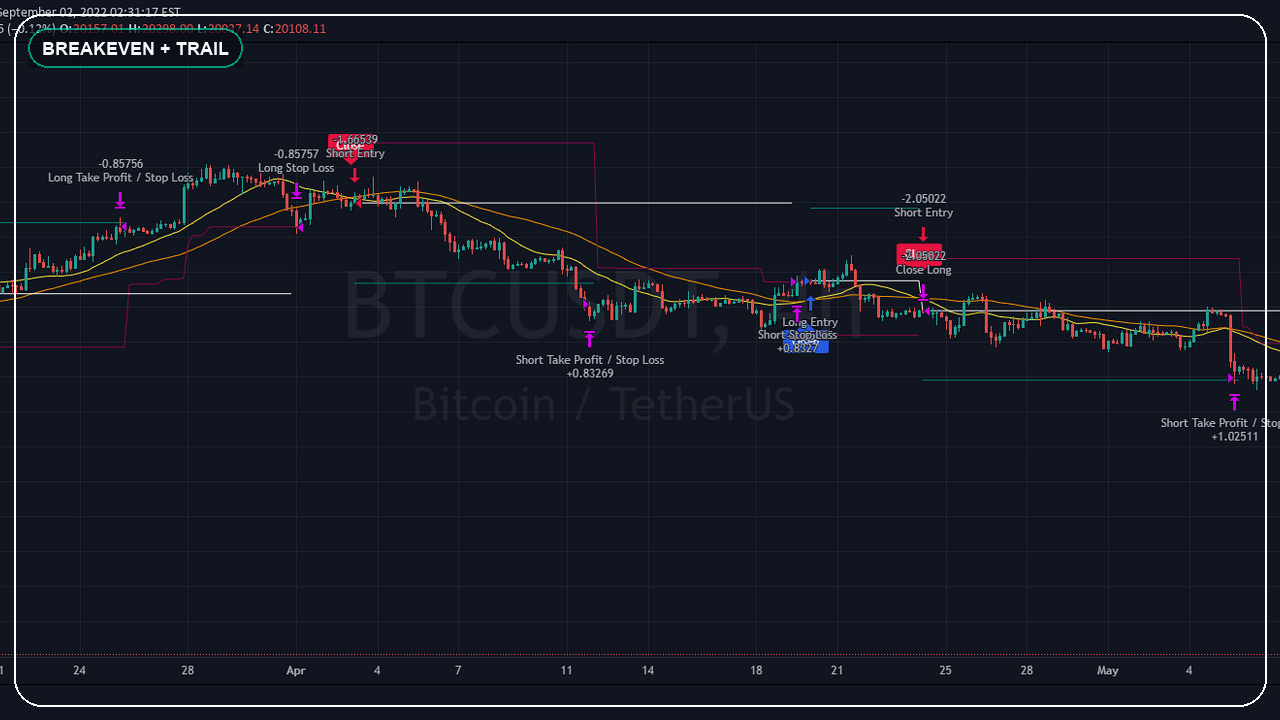
What breakeven and trailing stop logic in Pine Script actually does
A breakeven-plus-trailing model first protects the original risk, then moves the stop to breakeven after enough progress, and only later hands control to a trailing stop when the trade has earned more room to breathe.
This matters because many exit models feel inconsistent. They either trail too early and cut good trades, or they wait too long and give back too much. A cleaner sequence fixes that by giving each exit stage a specific job.
The reason this topic matters so much is that Pine Script usually feels simple until realtime behavior, confirmation, and live alerts expose the assumptions hidden inside the code. That is where a small parameter or declaration choice can completely change the outcome.
- Breakeven and trailing solve different problems and should be sequenced deliberately.
- A staged exit is usually easier to test than one giant formula.
- Live traders trust exits more when every phase is easy to explain.
- The best design depends on market structure and holding style, not fashion.
Where breakeven and trailing stop logic in Pine Script usually goes wrong
The trap is stacking breakeven and trailing rules without deciding which one has priority. Then the script behaves differently than the trader imagines and the exit becomes impossible to explain after the fact.
In practice, most problems here are not syntax problems. They are expectation problems. The code technically runs, but the trader expected one runtime behavior and the script delivered another. That is why this topic deserves design-time attention instead of being treated like a small implementation detail.
- Letting breakeven and trailing update the same stop with no clear order.
- Activating breakeven so early that normal price noise closes good trades.
- Turning on a trail before the position has earned enough structural space.
- Testing only winners instead of checking how the sequence behaves in chop.
How to use breakeven and trailing stop logic in Pine Script safely in live scripts
The safe pattern is a staged exit design with clear precedence: initial stop first, breakeven activation second, trailing behaviour third. Each stage should be visible and testable on its own.
The practical goal is not to make the chart look clever. The practical goal is to make the script behave the same way in live conditions as the trader expects from the finished code. That usually means explicit settings, conservative alerts, and enough instrumentation to debug what actually happened on the bar.
- Write the exit as a clear progression of states.
- Use thresholds that reflect the actual volatility of the setup.
- Plot or log each exit stage while debugging the script.
- Keep alert messages explicit about which exit stage fired.
What to check before you trust the result
Before trusting the result, make sure you can explain exactly when the initial stop becomes breakeven and when breakeven hands control to the trail.
The strongest Pine Script work feels a little boring when it is correct. The alerts line up, the visuals tell the truth, and the backtest or runtime assumptions are explicit enough that you can explain them later. That boring clarity is what you want.
- Verify the initial stop remains valid until breakeven truly activates.
- Check that breakeven does not trigger repeatedly or ambiguously.
- Confirm the trailing stage activates only after its intended condition.
- Review the equity curve and the individual trade list together.
Send the chart idea, broker, market, and goal on WhatsApp. I can usually tell you quickly whether it needs a custom indicator, a strategy audit, an alert fix, or a broker-ready automation layer.
Related services
Frequently asked questions
Should breakeven happen before trailing stop logic?
Usually yes. That keeps the exit model easier to explain and prevents the trail from taking over too early.
Why does my breakeven logic close too many good trades?
Often the activation threshold is too tight for the volatility of the setup, so normal movement knocks the trade out.
Can I automate breakeven and trailing exits with alerts?
Yes, but the alert payload should clearly identify which exit condition fired so the execution layer stays deterministic.
Is this better than a fixed take-profit?
Sometimes. It depends on whether the strategy benefits more from adaptive exits than from fixed reward targets.
Primary sources and references
I take on Pine Script indicators, TradingView automation layers, strategy audits, and broker-aware execution workflows when the goal is clear and the live behavior actually matters.