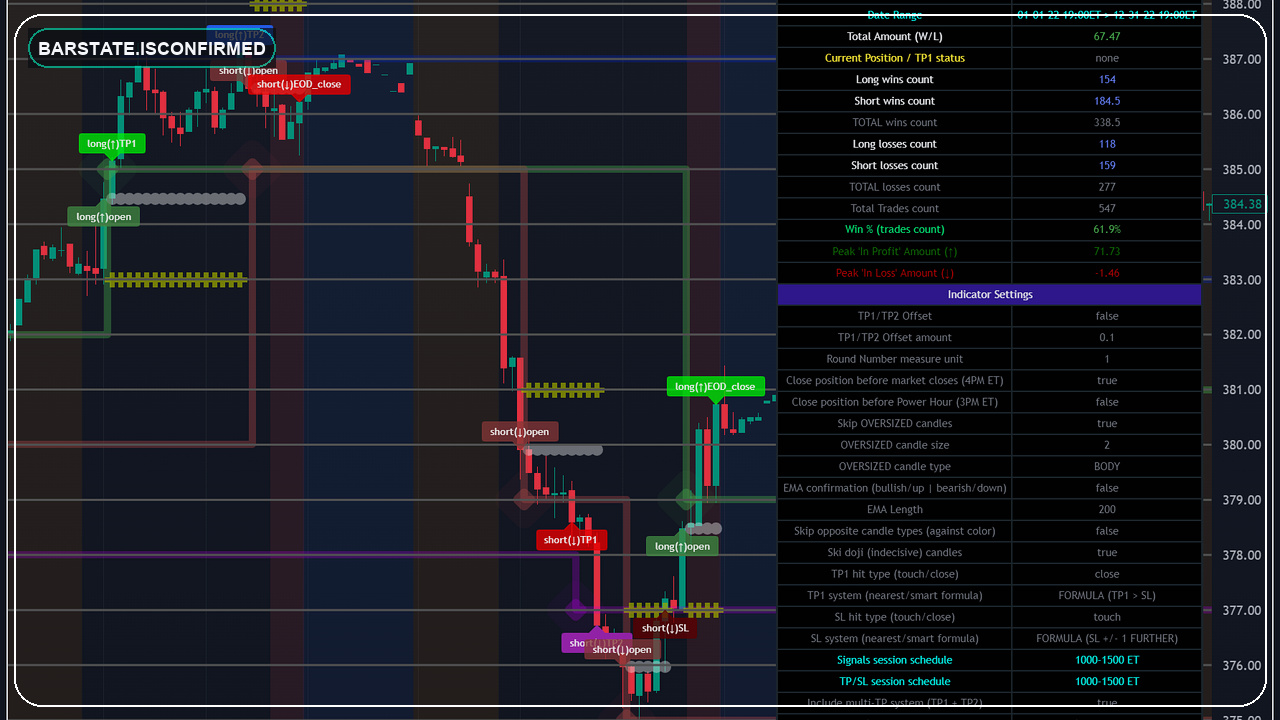
What barstate.isconfirmed actually does
barstate.isconfirmed tells the script whether the current bar has finished. That makes it useful when you want a condition to act only after the candle is final instead of reacting to intrabar movement that may disappear.
This matters because many traders think they want faster signals, but what they really want is honest signals. Waiting for confirmation often improves trust more than shaving a small amount of time off the trigger.
The reason this topic matters so much is that Pine Script usually feels simple until realtime behavior, confirmation, and live alerts expose the assumptions hidden inside the code. That is where a small parameter or declaration choice can completely change the outcome.
- Confirmed bars usually improve signal honesty more than signal excitement.
- This flag is strongest when paired with clear entry and reset rules.
- It helps reduce intrabar drift but does not fix every repaint source.
- Good confirmation design should be explained in plain language to the trader.
Where barstate.isconfirmed usually goes wrong
The trap is using barstate.isconfirmed as a bandage for every unstable script. It can reduce one major source of noise, but it does not automatically fix weak higher-timeframe logic, poor state design, or vague exit rules.
In practice, most problems here are not syntax problems. They are expectation problems. The code technically runs, but the trader expected one runtime behavior and the script delivered another. That is why this topic deserves design-time attention instead of being treated like a small implementation detail.
- Assuming confirmed bars automatically make a script non-repainting.
- Ignoring higher-timeframe or external data behaviour after adding the flag.
- Using confirmation on entries but not on the alerts that follow them.
- Treating slower signals as inferior without testing whether they are cleaner.
How to use barstate.isconfirmed safely in live scripts
The safe pattern is to use confirmation where the strategy truly benefits from finished-bar clarity, while still checking the rest of the script for other repaint or runtime assumptions.
The practical goal is not to make the chart look clever. The practical goal is to make the script behave the same way in live conditions as the trader expects from the finished code. That usually means explicit settings, conservative alerts, and enough instrumentation to debug what actually happened on the bar.
- Use the flag where finished-bar stability matters more than intrabar speed.
- Align your alerts with the same confirmation rule the plots use.
- Pair confirmed logic with explicit reset and invalidation behaviour.
- Audit the rest of the script for higher-timeframe leakage and state drift.
What to check before you trust the result
Before deciding that barstate.isconfirmed solved the problem, confirm that the remaining signal logic is also based on information the script can genuinely trust at that moment.
The strongest Pine Script work feels a little boring when it is correct. The alerts line up, the visuals tell the truth, and the backtest or runtime assumptions are explicit enough that you can explain them later. That boring clarity is what you want.
- Compare live behaviour before and after the confirmation change.
- Check whether false positives drop more than good signals do.
- Make sure your alert configuration reflects the same confirmed logic.
- Review whether exits and filters still behave coherently after the change.
Send the chart idea, broker, market, and goal on WhatsApp. I can usually tell you quickly whether it needs a custom indicator, a strategy audit, an alert fix, or a broker-ready automation layer.
Related services
Frequently asked questions
Does barstate.isconfirmed stop repainting completely?
No. It helps with one major source of instability, but other repaint risks can still remain in the script.
Should I use barstate.isconfirmed on every strategy?
Not automatically. It works best when the strategy truly values finished-bar confirmation over intrabar responsiveness.
Why do my alerts still feel wrong after using barstate.isconfirmed?
Because the rest of the logic may still rely on unstable conditions or the alert settings may not match the confirmed-bar design.
Is confirmed-bar logic better for automation?
For many systems, yes. It often produces cleaner, more explainable alerts and reduces avoidable duplicate or false triggers.
Primary sources and references
I take on Pine Script indicators, TradingView automation layers, strategy audits, and broker-aware execution workflows when the goal is clear and the live behavior actually matters.