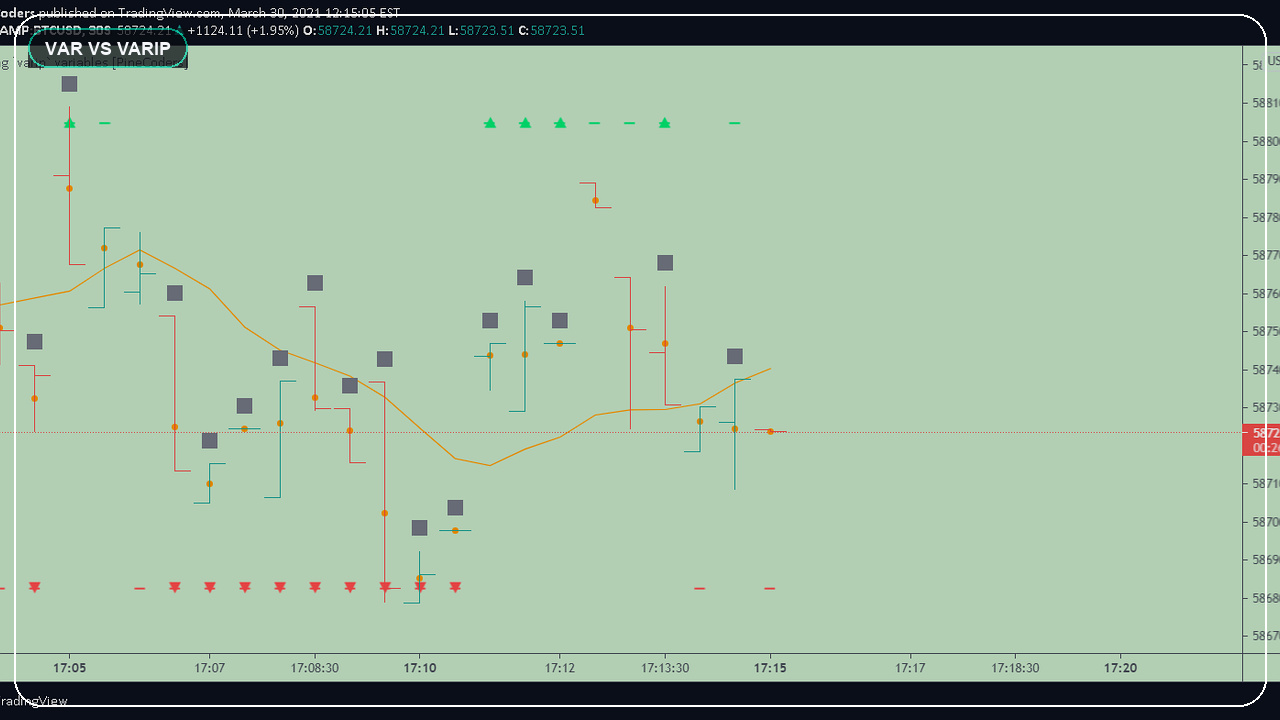
What var vs varip in Pine Script actually does
var and varip both create persistent state, but they behave differently as the script recalculates. That difference matters whenever the code needs to remember something across bars or within realtime updates.
This matters because many live-signal bugs are not indicator-math bugs. They are state bugs. The script remembers too much, forgets too much, or behaves differently on realtime updates than the trader expects.
The reason this topic matters so much is that Pine Script usually feels simple until realtime behavior, confirmation, and live alerts expose the assumptions hidden inside the code. That is where a small parameter or declaration choice can completely change the outcome.
- Persistent state is often the hidden reason a live script feels different from its plot.
- The choice between var and varip matters most in realtime and intrabar behaviour.
- Good state design is explicit about resets, not just about storage.
- Debugging persistent variables usually reveals the real architecture of the script.
Where var vs varip in Pine Script usually goes wrong
The trap is copying var or varip from another script without understanding why it was used there. Persistent state is powerful, but it becomes dangerous when it is added mechanically.
In practice, most problems here are not syntax problems. They are expectation problems. The code technically runs, but the trader expected one runtime behavior and the script delivered another. That is why this topic deserves design-time attention instead of being treated like a small implementation detail.
- Using persistent state without defining when it should reset.
- Expecting historical and realtime recalculation to treat memory the same way automatically.
- Mixing several remembered values without a clear lifecycle model.
- Copying persistent-variable patterns from unrelated public scripts.
How to use var vs varip in Pine Script safely in live scripts
The safe pattern is to decide what the script truly needs to remember, over what scope, and under which recalculation conditions. Then choose the persistence model that matches that design.
The practical goal is not to make the chart look clever. The practical goal is to make the script behave the same way in live conditions as the trader expects from the finished code. That usually means explicit settings, conservative alerts, and enough instrumentation to debug what actually happened on the bar.
- Store only the state the strategy truly needs.
- Write reset conditions as clearly as entry conditions.
- Test the variable behaviour on realtime updates, not only on history.
- Plot or log state transitions while debugging.
What to check before you trust the result
Before trusting a persistent-state fix, confirm that the remembered value resets exactly when the strategy says it should and survives exactly as long as it needs to.
The strongest Pine Script work feels a little boring when it is correct. The alerts line up, the visuals tell the truth, and the backtest or runtime assumptions are explicit enough that you can explain them later. That boring clarity is what you want.
- Check how the variable behaves on the first bar, new bars, and live updates.
- Verify the reset rules match the actual trading logic.
- Inspect state changes around entries, exits, and signal invalidations.
- Review whether the remembered value could create duplicate or stale alerts.
Send the chart idea, broker, market, and goal on WhatsApp. I can usually tell you quickly whether it needs a custom indicator, a strategy audit, an alert fix, or a broker-ready automation layer.
Related services
Frequently asked questions
What is the main difference between var and varip in Pine Script?
Both preserve state, but they behave differently across recalculations, which becomes especially important on realtime or intrabar updates.
Why do persistent variables create live bugs?
Because the script may remember a value longer than intended or reset it differently than the trader assumes.
Should I avoid var and varip?
No. They are very useful. The key is to use them deliberately and with clear reset logic.
Can var or varip help fix multiple signals?
Yes. Clean persistent state is often part of solving repeated entries or repeated alert issues.
Primary sources and references
I take on Pine Script indicators, TradingView automation layers, strategy audits, and broker-aware execution workflows when the goal is clear and the live behavior actually matters.