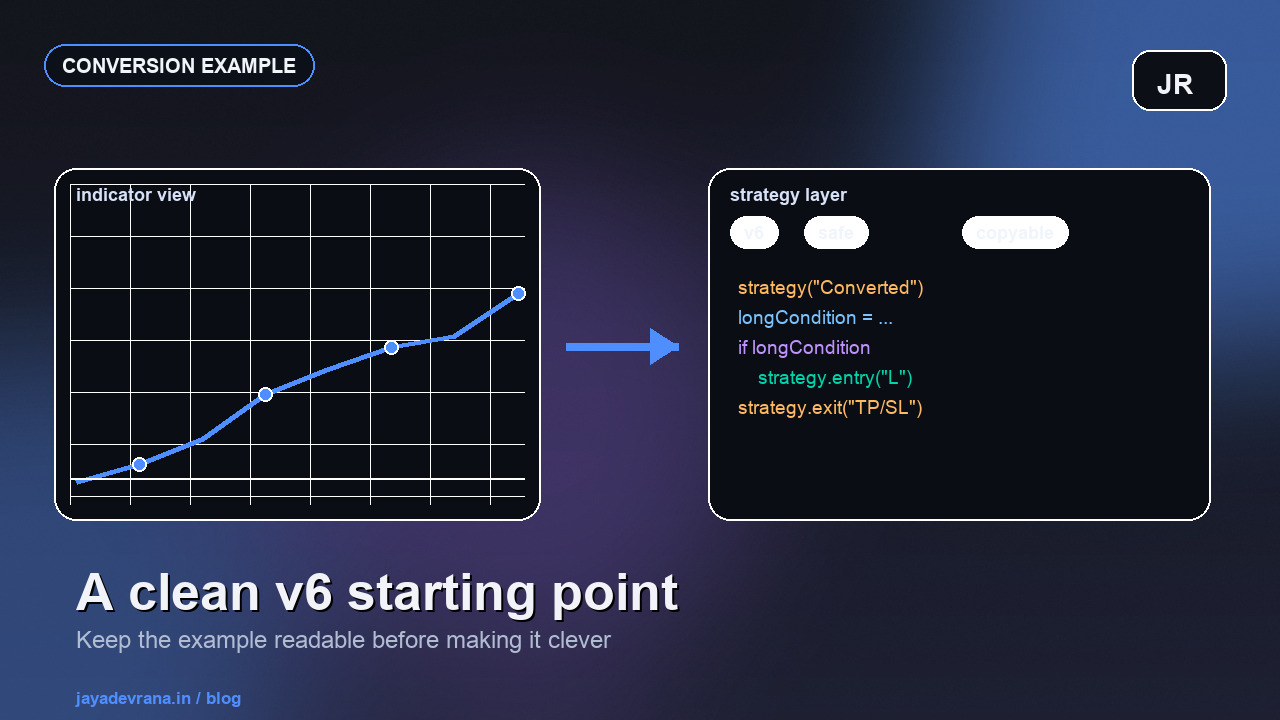
Direct answer
The cleanest indicator-to-strategy example is one where you can point to the signal, the entry, the exit, and the invalidation without guessing what each line is supposed to mean.
That is what makes the example reusable. Once the structure is readable, you can adapt it to your own logic without destroying the backtest or the alert layer.
Where people usually get this wrong
Most public examples become useless because they mix conversion with over-engineering.
- showing ten filters before the base signal has been converted properly
- using strategy.entry without deciding how the trade should actually end
- keeping indicator-only visual logic that confuses the test results
- calling it done before the alerts and bar behavior have been reviewed
Copyable example
This is the kind of base pattern I prefer to start from before adding more filters, styling, or automation layers.
//@version=6
strategy("Indicator to strategy pattern", overlay = true)

fast = ta.ema(close, 21)
slow = ta.ema(close, 55)
longSignal = barstate.isconfirmed and ta.crossover(fast, slow)
flatSignal = barstate.isconfirmed and ta.crossunder(fast, slow)

plot(fast, "Fast EMA", color.new(color.teal, 0), 2)
plot(slow, "Slow EMA", color.new(color.orange, 0), 2)

if longSignal and strategy.position_size <= 0
    strategy.entry("L", strategy.long)

if strategy.position_size > 0
    stopPrice  = strategy.position_avg_price * 0.99
    limitPrice = strategy.position_avg_price * 1.02
    strategy.exit("L exit", "L", stop = stopPrice, limit = limitPrice)

if flatSignal and strategy.position_size > 0
strategy.close("L")How I would handle it in a real build
I prefer examples that feel almost too simple. If the example is already hard to explain, the real strategy will be even harder to trust later.
If your current script or workflow already exists and the behavior is drifting, send the setup or code on WhatsApp. I can usually tell quickly whether it needs a rewrite, a migration pass, or a smaller audit.
WhatsApp for a 3-minute quoteWhat to read next
If this topic is part of a bigger TradingView or Pine Script workflow for you, these are the most useful follow-up guides on the site.
- Ultimate indicator-to-strategy guide
- strategy() vs indicator()
- strategy.exit stop loss and take profit
Send the chart idea, broker, market, and goal on WhatsApp. I can usually tell you quickly whether it needs a custom indicator, a strategy audit, an alert fix, or a broker-ready automation layer.
Related services
Frequently asked questions
Should I optimize this for backtests first or live behavior first?
Live behavior comes first. A cleaner live model usually gives you a more believable backtest, while the reverse is not always true.
Is Pine Script v6 the safer default for new examples now?
Yes. Traders still search with older wording, but new examples are usually easier to maintain and explain in v6.
When is the next step a service page instead of another tutorial?
Once you know the logic you want and the remaining problem is implementation, audit, or broker-ready structure, the service path is usually the better next move.
Primary sources and references
I take on Pine Script indicators, TradingView automation layers, strategy audits, and broker-aware execution workflows when the goal is clear and the live behavior actually matters.