Direct answer
A usable ORB strategy starts with one simple question: when exactly does the opening range end, and what counts as a real break after that range is locked?
That sounds basic, but it is why so many ORB scripts look fine in hindsight and feel sloppy live. Session boundaries, false breaks, and intrabar spikes can all distort the result if the range logic is vague.
Where people usually get this wrong
The common error is thinking ORB is just high and low lines plus a breakout arrow.
- not defining the exact session window the range belongs to
- letting the range keep updating after the window should be locked
- treating every wick through the range as a trade signal
- ignoring how stops and failed breaks should be handled
Copyable example
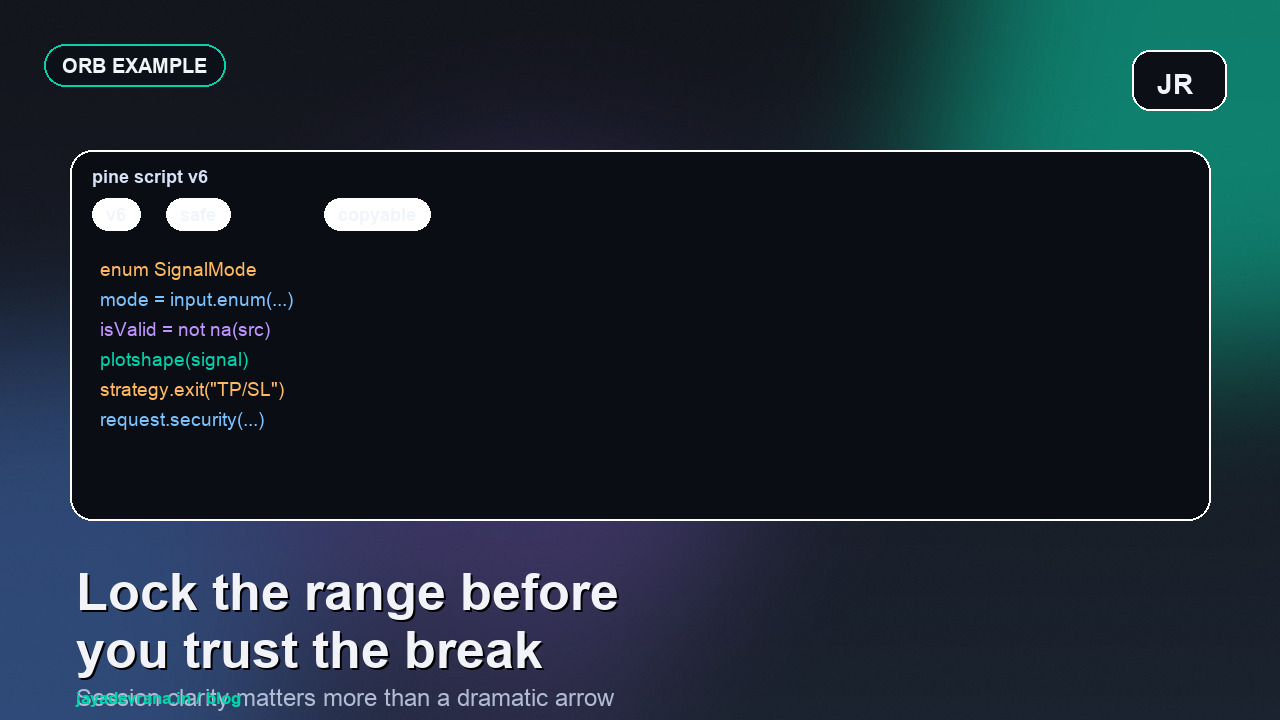
This is the kind of base pattern I prefer to start from before adding more filters, styling, or automation layers.
//@version=6
strategy("Opening Range Breakout", overlay = true)

sessionTime = input.session("0915-0930", "Opening range")
inRange = not na(time(timeframe.period, sessionTime))
var float rangeHigh = na
var float rangeLow = na

if inRange
    rangeHigh := na(rangeHigh) ? high : math.max(rangeHigh, high)
    rangeLow := na(rangeLow) ? low : math.min(rangeLow, low)

breakoutLong = not inRange and ta.crossover(close, rangeHigh)
breakoutShort = not inRange and ta.crossunder(close, rangeLow)

if breakoutLong
    strategy.entry("ORB-L", strategy.long)
if breakoutShort
strategy.entry("ORB-S", strategy.short)How I would handle it in a real build
When I build ORB logic, I define the session, the confirmation rule, and the invalidation rule before I care about optimization. That keeps the strategy readable and stops the backtest from being built on a moving target.
If your current script or workflow already exists and the behavior is drifting, send the setup or code on WhatsApp. I can usually tell quickly whether it needs a rewrite, a migration pass, or a smaller audit.
WhatsApp for a 3-minute quoteWhat to read next
If this topic is part of a bigger TradingView or Pine Script workflow for you, these are the most useful follow-up guides on the site.
- Build a market opening range breakout system
- Pine Script Backtesting Guide
- Why backtests do not match live results
Send the chart idea, broker, market, and goal on WhatsApp. I can usually tell you quickly whether it needs a custom indicator, a strategy audit, an alert fix, or a broker-ready automation layer.
Related services
Frequently asked questions
Should I optimize this for backtests first or live behavior first?
Live behavior comes first. A cleaner live model usually gives you a more believable backtest, while the reverse is not always true.
Is Pine Script v6 the safer default for new examples now?
Yes. Traders still search with older wording, but new examples are usually easier to maintain and explain in v6.
When is the next step a service page instead of another tutorial?
Once you know the logic you want and the remaining problem is implementation, audit, or broker-ready structure, the service path is usually the better next move.
Primary sources and references
I take on Pine Script indicators, TradingView automation layers, strategy audits, and broker-aware execution workflows when the goal is clear and the live behavior actually matters.