TradingView to Tradovate Futures Bridge
A Dockerised webhook server that converts TradingView alerts into Tradovate futures orders.
Buy, sell, and close actions from TradingView alerts, executed against the Tradovate futures API with a proxy and deploy scripts.
- TradingView alerts to Tradovate futures orders
- Buy, sell, and close action handling
- Proxy plus one-command Docker deploy scripts
- Part of a consistent, auditable broker-bridge family
A Dockerised webhook server that turns TradingView alerts into Tradovate futures orders. It handles buy, sell, and close actions, sits behind a proxy, and ships with deploy scripts so it can be stood up quickly on a server. It is part of a deliberately consistent family of broker bridges I maintain — same webhook-in, broker-order-out pattern, adapted to each platform's API and quirks.
Keeping the surface small and Dockerised makes it auditable and repeatable: you can read what it does, deploy it in one command, and point TradingView at it. Reusing the same webhook contract across brokers means a trader who has already run one bridge understands this one immediately, and keeping the surface small keeps it easy to audit before it touches a live account.
Executes live broker orders; shared as engineering work, not financial advice. No profit is promised and users trade their own accounts at their own risk.
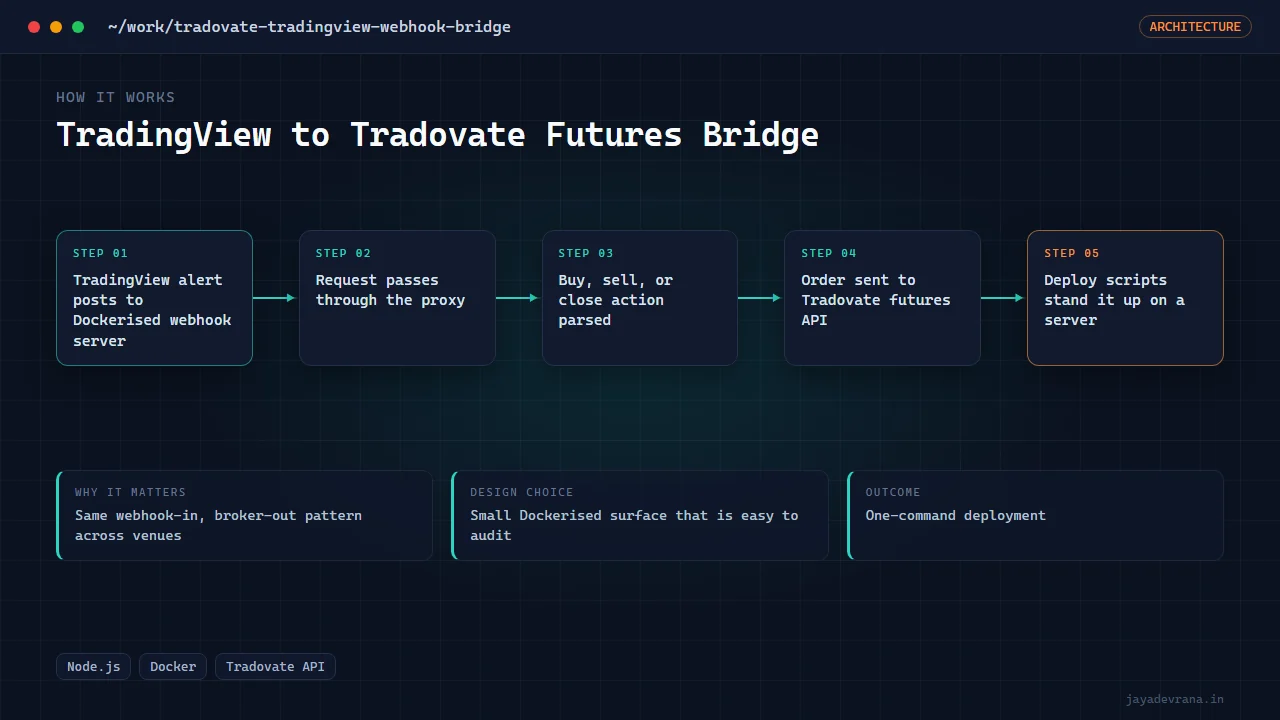
How it works
- TradingView alert posts to Dockerised webhook server
- Request passes through the proxy
- Buy, sell, or close action parsed
- Order sent to Tradovate futures API
- Deploy scripts stand it up on a server
Software and automation are infrastructure, not financial advice. No performance guarantees. Every live system needs staged testing, risk limits, and owner approval.