Binance Automation Webhook Platform
Multi-tenant SaaS that runs each client's own TradingView alerts on their own Binance account.
Production-grade trading infrastructure: token webhooks, encrypted keys, a queued order engine, admin approval and safety limits.
- Multi-tenant design with per-user API keys encrypted at rest (AES-256-GCM)
- BullMQ + Redis queue for reliable, idempotent order execution
- Admin approval workflow and per-account safety limits
- Dockerised deploy behind a Caddy reverse proxy
A production-grade, multi-tenant SaaS where each user connects their own Binance Spot account (testnet or live), receives a private webhook token, and has their TradingView alerts executed automatically on their own funds. I built the full stack: a Next.js + TypeScript front end, a Prisma data layer, a BullMQ/Redis queue for reliable order execution, AES-256-GCM encryption for stored API keys, an admin approval flow, and per-account safety limits. It is Dockerised behind a Caddy reverse proxy for deployment.
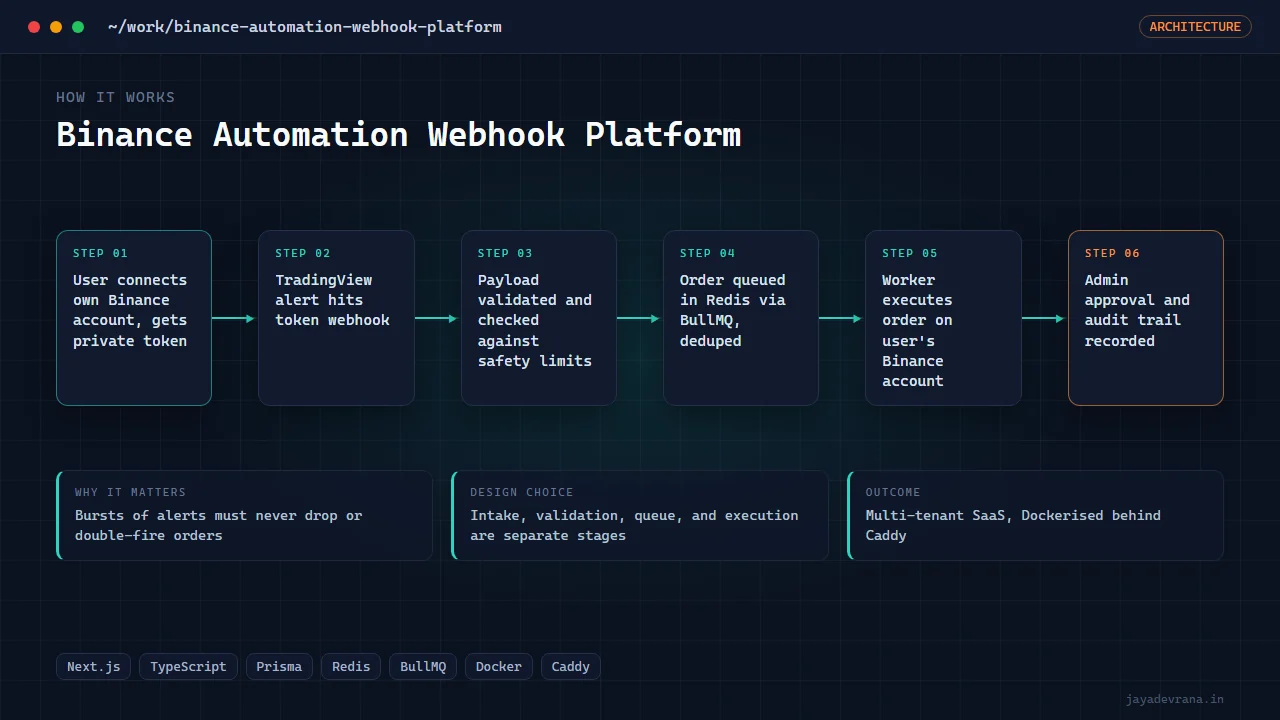
The architecture separates signal intake, validation, queuing, and broker execution, so a burst of alerts never drops or double-fires an order. This is trading-infrastructure engineering — access control, secrets handling, idempotency, and auditability — not a throwaway bot.
Executes live broker orders; shared as engineering work, not financial advice. No profit is promised and users trade their own accounts at their own risk.
How it works
- User connects own Binance account, gets private token
- TradingView alert hits token webhook
- Payload validated and checked against safety limits
- Order queued in Redis via BullMQ, deduped
- Worker executes order on user's Binance account
- Admin approval and audit trail recorded