Sixty-Book AI Playbook Pipeline
A resumable SQLite-queue pipeline that researches, writes, reviews and builds 60 ebooks across five series with parallel model workers.
Catalog YAML per series, twelve parallel workers through the Claude CLI, a reader panel that scored v1 and drove a v2 prompt set, edition versioning, a scheduled relauncher, and operational guards for paused queues.
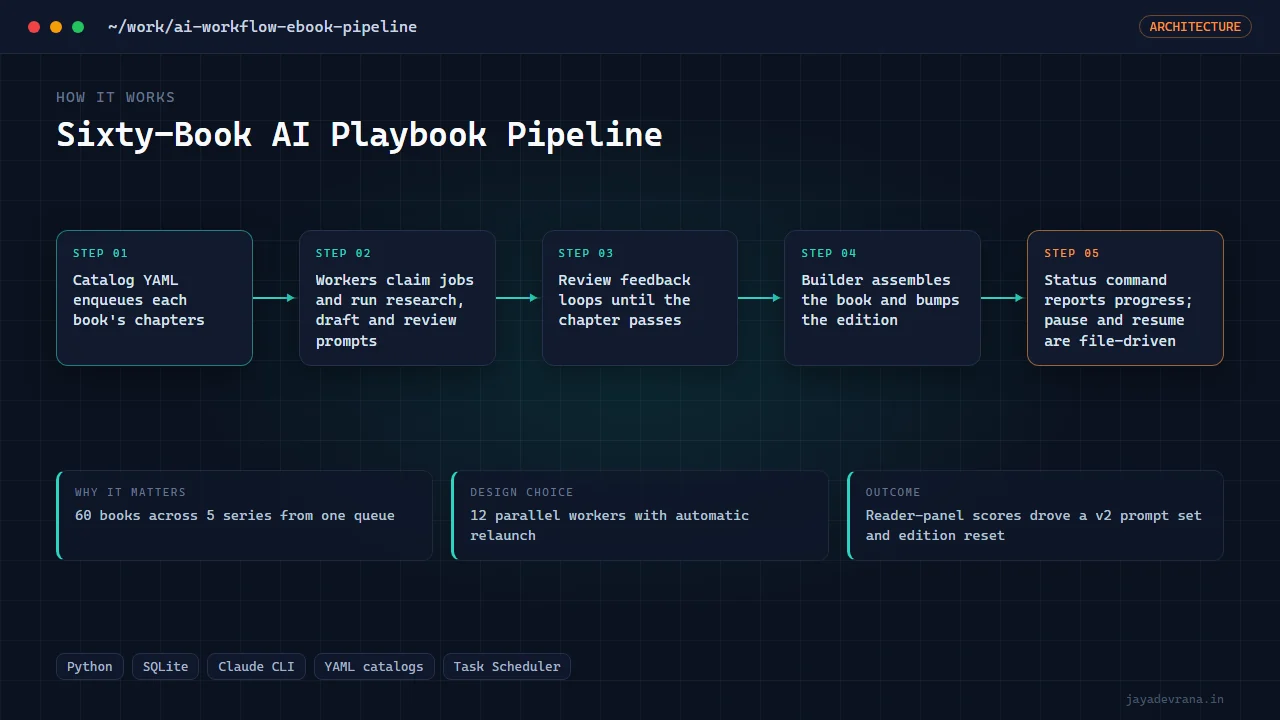
- 60 books across 5 series from one queue
- 12 parallel workers with automatic relaunch
- Reader-panel scores drove a v2 prompt set and edition reset
- Handoff document with exact resume steps
I wanted a complete library of practical AI-workflow books for India and global readers across five niches, produced at machine scale but read like a human wrote them. The pipeline is a Python package with a SQLite job queue and a launcher: each book moves through research, outline, drafting, review and build stages, with twelve workers running in parallel through the Claude command line on the subscription rather than API keys, and a scheduled task that relaunches the worker pool every half hour so an unattended run survives crashes.
Quality was measured before scaling. A reader panel scored the first books five to seven out of ten and named the faults: research notes leaking into prose, repeated and contradictory vendor terms, unused case studies and bloat. Version-two prompts fix each fault, the early books were reset to a new edition number, and all sixty are being produced on the new prompts with a handoff document listing exact resume steps.
Two operational lessons are recorded for whoever runs it next: a restart job that sets pause and then dies leaves everything paused, so check the pause flag before suspecting the model; and patch scripts must be written with a file tool because shell heredocs corrupt escape sequences.
How it works
- Catalog YAML enqueues each book's chapters
- Workers claim jobs and run research, draft and review prompts
- Review feedback loops until the chapter passes
- Builder assembles the book and bumps the edition
- Status command reports progress; pause and resume are file-driven