TradingView webhook automation in India works best when alerts are treated as messages to a risk-aware bridge, not direct instructions that should be blindly converted into orders.
When I audit this kind of build for Indian traders, I do not start by asking whether the webhook is fast. I first ask whether the signal is honest. If the Pine Script repaints, fires on every tick without control, or changes meaning after the candle closes, speed only makes the mistake arrive sooner.
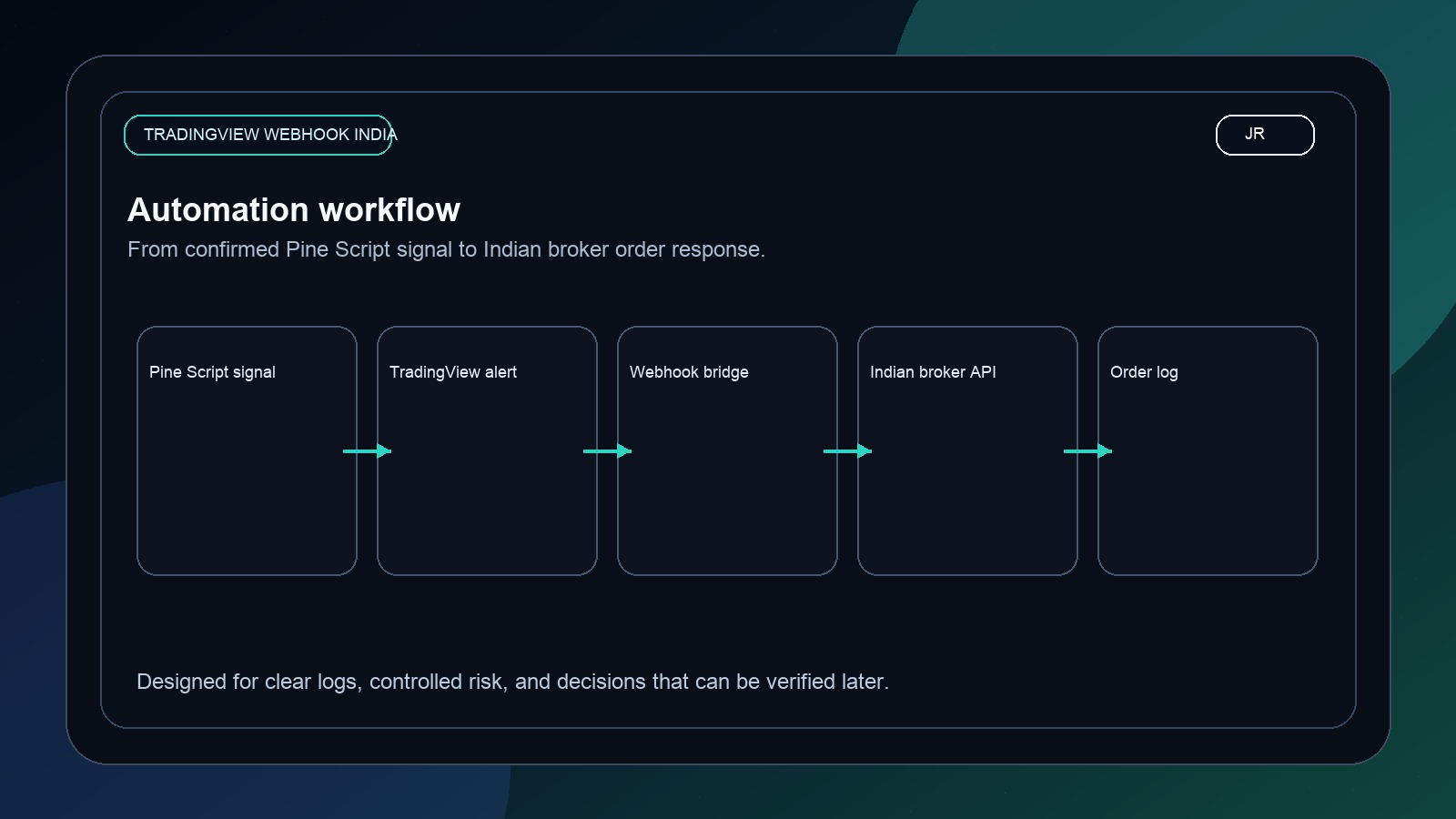
What I check first
The first layer is the TradingView script. I check whether entries are confirmed, whether alerts use a clear frequency, whether the message contains enough data to debug, and whether the chart signal matches the alert signal. This is where many automation projects break: the visible label says one thing, but the alert condition was written against another state variable.
For India-focused webhook work, I check message format, broker routing, order quantity safety, alert retries, market-session timing, and logs that show exactly why an order was placed or rejected.
Why Jayadev Rana is useful for this work
My edge is that I write the Pine Script side and understand the automation side. That means I can see where a problem belongs. Sometimes it is not the broker. Sometimes it is a repainting condition. Sometimes it is symbol mapping, stale access tokens, quantity rules, or a bridge that retries without checking whether the first order already went through.
That is why I prefer an audit before promising a full automation build. A good audit saves money because it separates script issues, webhook issues, and broker API issues before live capital is involved.
{
  "source": "tradingview",
  "strategy": "nifty-breakout-v6",
  "symbol": "NSE:NIFTY",
  "action": "BUY",
  "quantity": 50,
  "risk_id": "NIFTY-15M-20260426-0915",
  "bar_time": "{{time}}",
  "price": "{{close}}"
}Audit checklist I use before live trading
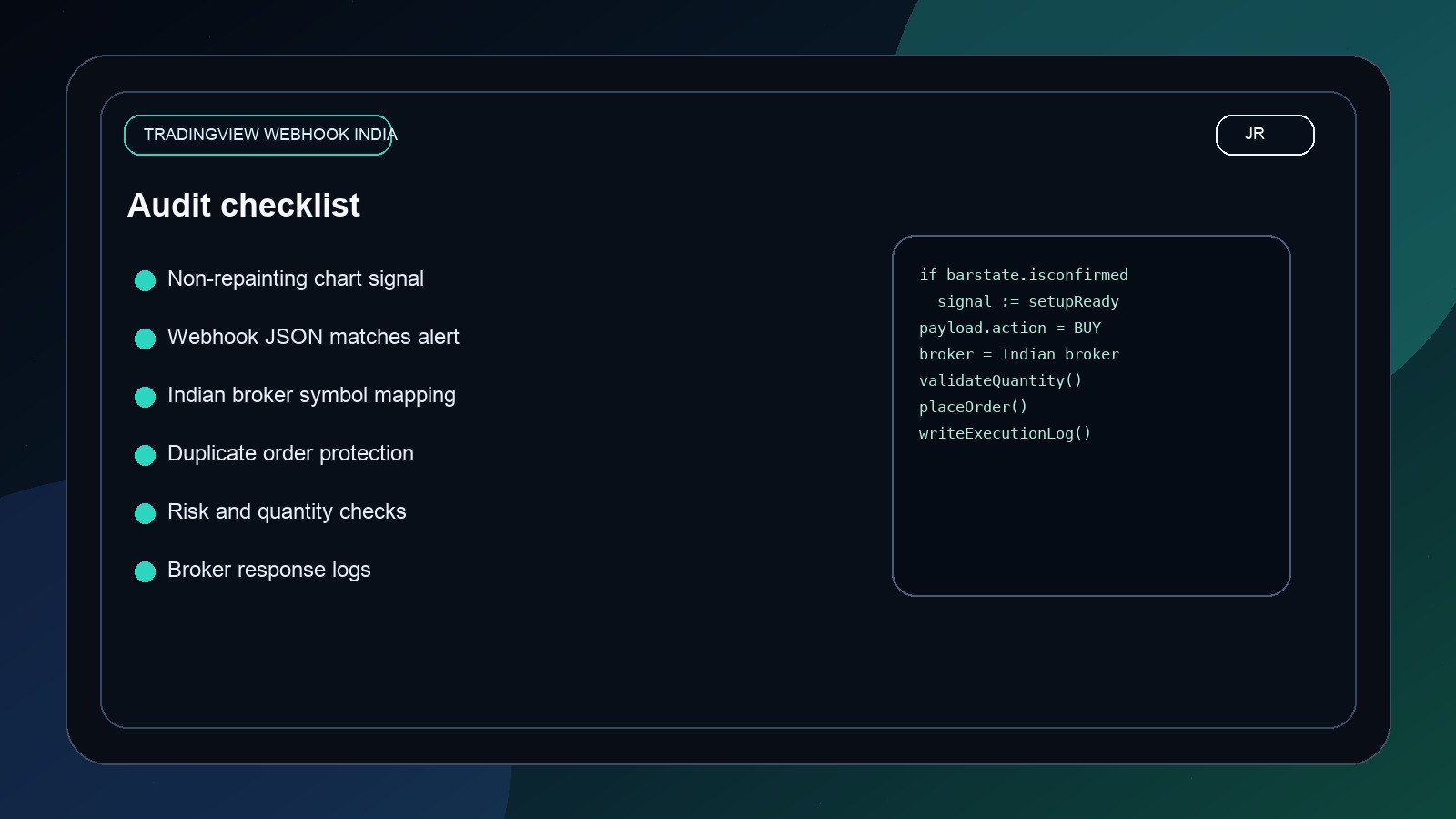
- Confirm that the Pine Script condition is non-repainting for the intended timeframe.
- Verify that TradingView alert frequency matches the trading plan.
- Test webhook JSON with the exact symbol, action, and quantity format used live.
- Check broker-side order rules, exchange mapping, product type, and rejection messages.
- Add duplicate order protection so one chart event does not become multiple broker orders.
- Log every alert, bridge decision, broker request, and broker response.
Common failure pattern
The most common failure is not dramatic. It is usually a small mismatch: the chart uses one symbol name, the broker requires another; the script fires intrabar but the trader expected candle close; the bridge accepts every duplicate alert; or the strategy sends a quantity that is valid on paper but rejected by the broker. These are fixable problems, but only if the system is built with logs and discipline.
Free TradingView Automation Audit
If you already have a TradingView alert, Pine Script strategy, or webhook bridge, I can review the setup and tell you where the risk is. The goal is to make the automation explainable before it touches real orders.
Request a Free TradingView Automation Audit on WhatsApp
You can also review public work and open-source contributions on the Work section, then send the script, screenshot, and broker workflow you want checked.
Send the chart idea, market, timeframe, and goal on WhatsApp. I can usually tell you quickly whether the next step is a custom Pine Script build, a strategy audit, or a broker-ready automation layer.
Related services
Frequently asked questions
Can TradingView place orders directly?
TradingView alerts can send webhook messages, but broker execution needs a bridge or API layer that validates and places orders.
Do you need my broker password?
No. A safe setup should use the broker-approved authentication flow and avoid sharing sensitive account credentials casually.
What should I send for an audit?
Send the Pine Script, TradingView alert message, broker name, symbol list, timeframe, and a short note about the intended order flow.
Primary sources and references
I take on Pine Script indicators, TradingView automation layers, strategy audits, and broker-aware execution workflows when the goal is clear and the live behavior actually matters.