Pine Script alerts are reliable only when the condition, frequency, message, and TradingView alert setup all match the way the script behaves on live bars.
I have seen many scripts that look impressive for five minutes and become impossible to maintain after the first change request. My style is different. I prefer clean logic, visible assumptions, and code that a serious trader can discuss without guessing what the script is doing.
What professional work looks like
Professional Pine Script work is not about adding more labels, colors, and alerts until the chart looks busy. It is about deciding what the trader needs to know at the exact moment the decision is made. The script should reduce confusion, not decorate it.
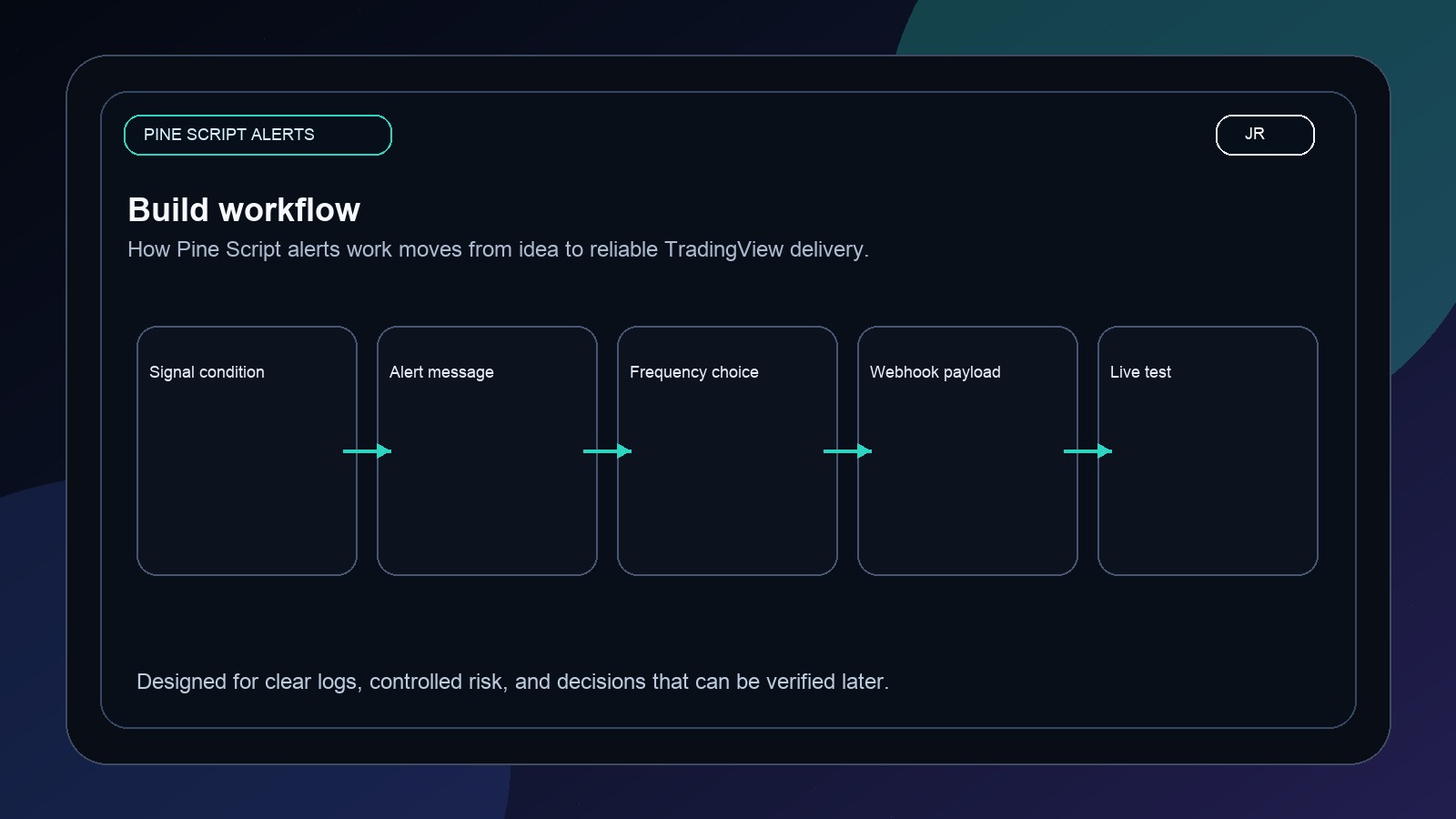
For service projects, I usually break the work into four parts: define the trading idea, build the script, test edge cases, and prepare the final handover. That handover matters. A client should know which inputs to change, which alerts to create, and which limits are built into the logic.
//@version=6
indicator("Clean signal pattern", overlay = true)

fast = ta.ema(close, 20)
slow = ta.ema(close, 50)

longSignal = ta.crossover(fast, slow) and barstate.isconfirmed
shortSignal = ta.crossunder(fast, slow) and barstate.isconfirmed

plot(fast, "Fast EMA", color = color.teal)
plot(slow, "Slow EMA", color = color.orange)
plotshape(longSignal, "Long", shape.triangleup, location.belowbar, color = color.lime, text = "BUY")
plotshape(shortSignal, "Short", shape.triangledown, location.abovebar, color = color.red, text = "SELL")

alertcondition(longSignal, "Long signal", "Long signal confirmed on {{ticker}} at {{close}}")
alertcondition(shortSignal, "Short signal", "Short signal confirmed on {{ticker}} at {{close}}")How I keep the build honest
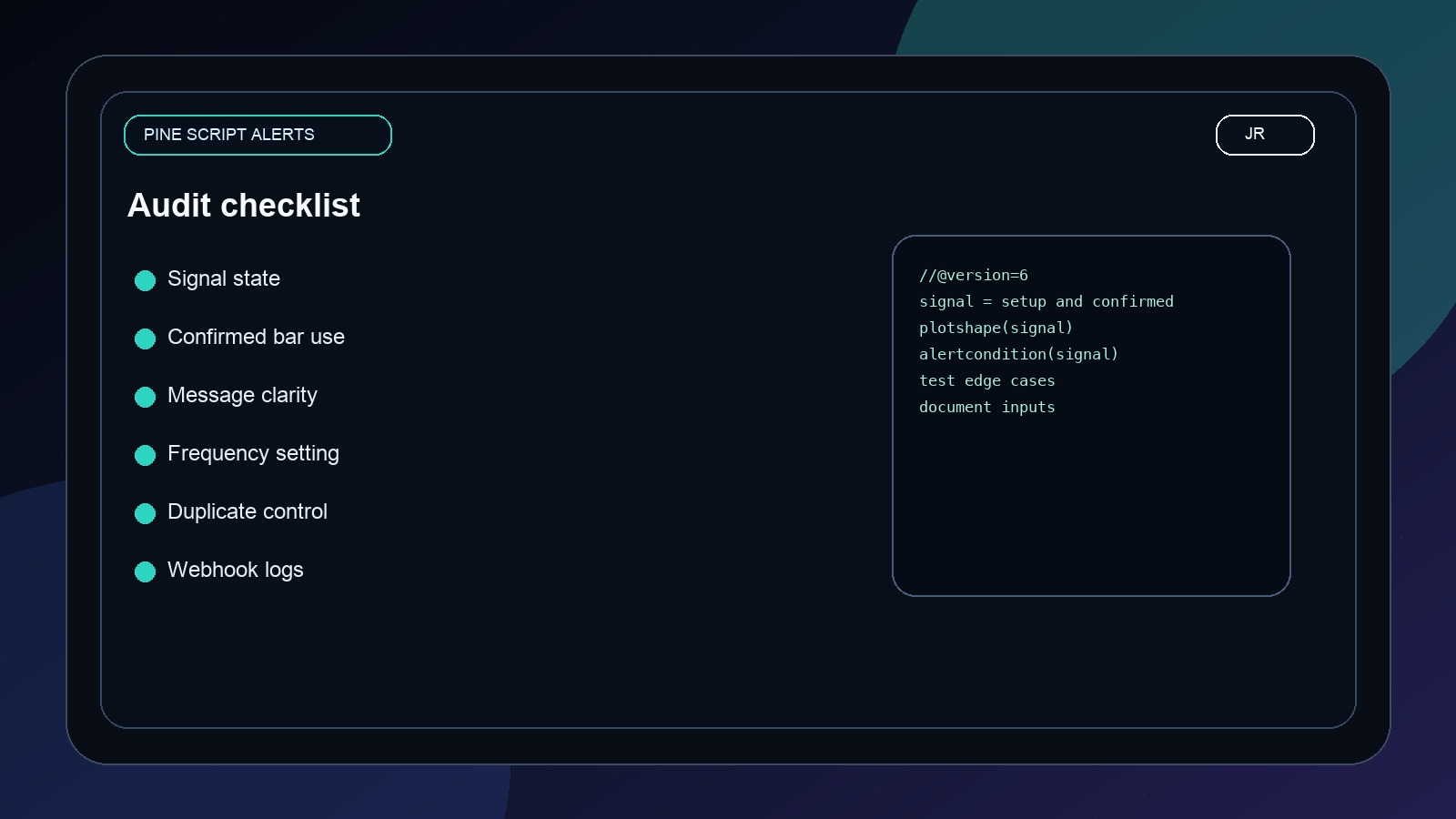
- I separate visual signals from execution signals so the chart and alert behavior are easy to compare.
- I avoid repainting shortcuts unless the client explicitly wants a research-only tool.
- I write inputs and labels so future changes do not require rewriting the entire script.
- I test repeated alerts, flat markets, gaps, timeframe changes, and missing data cases.
- I document what the script can do and what it should not be trusted to do.
Where Jayadev Rana fits
My public TradingView work, broker automation guides, and client-focused builds all come from the same belief: trading code should be useful after the first excitement fades. If a script cannot be explained, debugged, and improved, it is not finished.
That is also why I do not force every project into the same package. A quick indicator fix, a strategy conversion, a webhook-ready alert system, and a broker automation build are different scopes. The quote should reflect that difference.
Get a fixed-price quote in 24 hours
Send the current script, a screenshot of the chart, and a short explanation of what you want changed or built. I will respond with the cleanest scope, the delivery path, and a fixed-price quote within 24 hours.
Get a fixed-price quote in 24 hours on WhatsApp
If you want to verify the style first, start with the Work section, then compare the public examples with the kind of build you need.
Send the chart idea, market, timeframe, and goal on WhatsApp. I can usually tell you quickly whether the next step is a custom Pine Script build, a strategy audit, or a broker-ready automation layer.
Related services
Frequently asked questions
Can you work with an existing script?
Yes. I can audit, repair, rewrite, or extend an existing Pine Script when the intended behavior is clear.
Do you give copyable code?
For custom Pine Script projects, the delivered script is readable and prepared for practical use unless a different scope is agreed.
How do I get a quote?
Send the script or requirement on WhatsApp with the timeframe, market, signals, and alert behavior you need.
Primary sources and references
I take on Pine Script indicators, TradingView automation layers, strategy audits, and broker-aware execution workflows when the goal is clear and the live behavior actually matters.