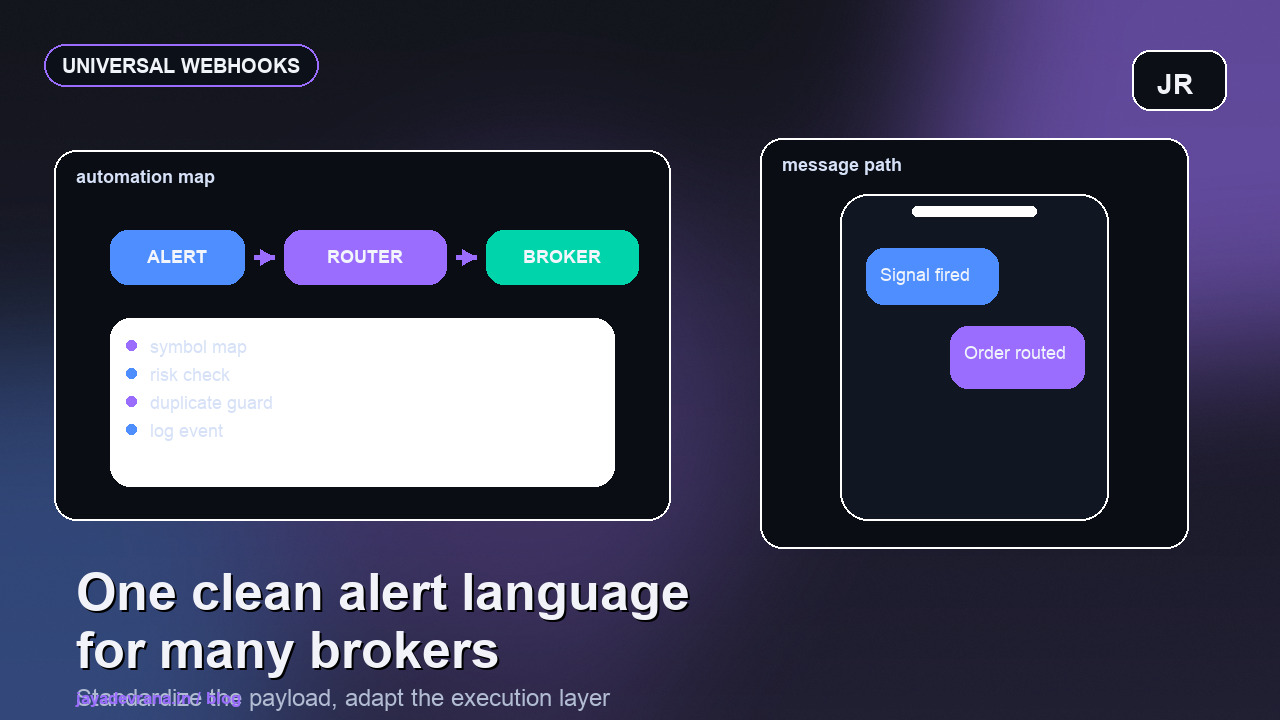
What no-code can do well
No-code or low-code tools are often good for alert forwarding, notifications, simple routing, and initial operator workflows. They are less good when the project needs broker-specific validation, complex symbol handling, or serious error recovery.
A safe no-code checklist
- keep the payload simple and machine-readable
- log every event and failure path
- start with notifications or semi-automatic routing first
- move to custom code only when the workflow complexity actually demands it
When no-code stops being enough
The moment you need stronger broker controls, symbol mapping, retries, or operator state, a custom bridge is usually cleaner than stretching a no-code flow beyond what it can safely explain.
Frequently asked questions
Can I fully automate TradingView alerts without writing code?
Sometimes for simple flows, but serious broker routing usually needs a proper validation and execution layer at some point.
What is the biggest no-code mistake?
Assuming the workflow is safe just because it is easy to assemble. Easy setup is not the same as operational clarity.
References
If you want to turn this topic into a real build or a clearer plan, send the setup on WhatsApp. You can also review the Work and Proof pages first if you want examples before you message.